What is intuition?
Intuition is our inner navigator, the quiet voice of the soul that always knows the way. It arises from the fusion of all our experiences, knowledge, feelings, and subtle signals we pick up—even when the mind hasn’t yet understood anything.
Intuition works faster than logic. It doesn’t require lengthy reasoning, gathering facts, or analysis. It’s like a sudden illumination, an insight, a clear “yes” or “no” from within. Sometimes we call it a “gut feeling” or “sixth sense,” and more often than not, it turns out to be right.
It’s not coincidence or magic. Intuition is a part of our intelligence—just more refined and profound. It bridges the conscious and the unconscious, the mind and the heart. That’s why its decisions can be more accurate than the coldest calculations.
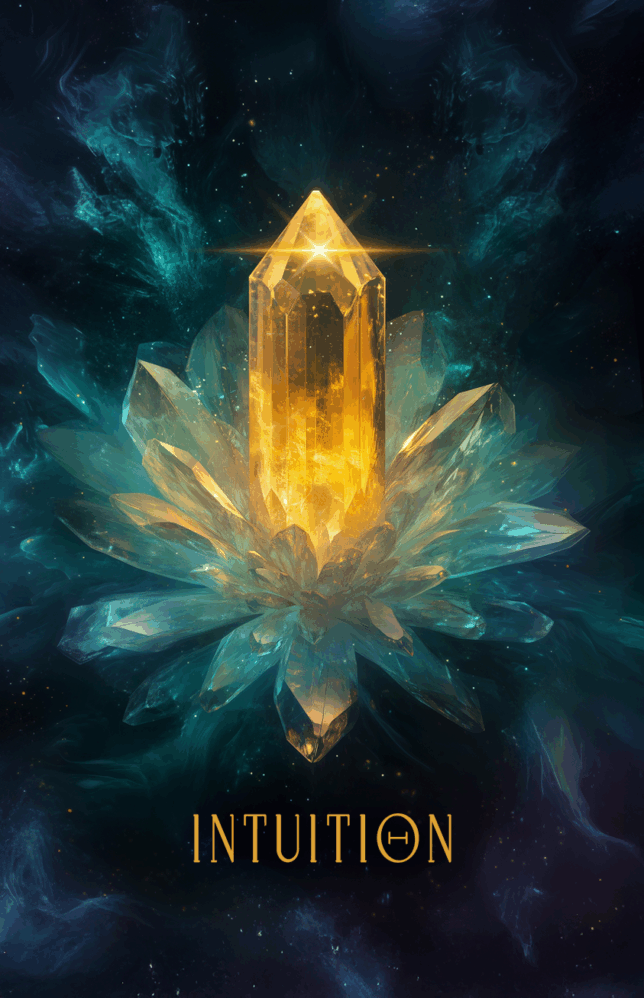
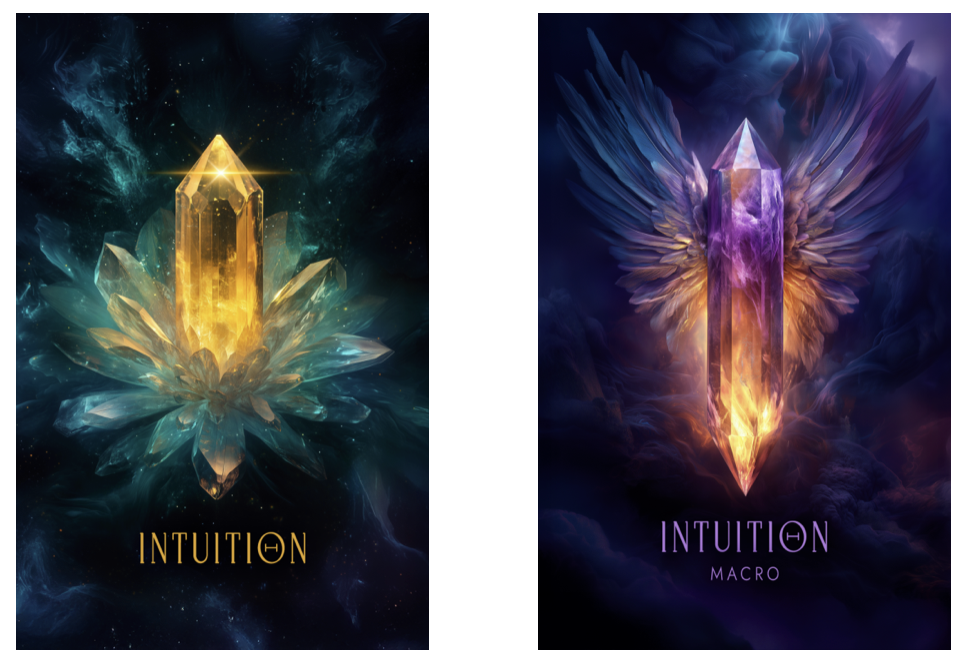
INTUITION and INTUITION MACRO on GDVPLANET
The Connection Between Intuition and Emotional Intelligence
Intuition and emotional intelligence go hand in hand. Emotional intelligence helps us recognize our own feelings and understand the emotions of others. Intuition uses this information, transforming it into quick decisions and precise actions.
If emotional intelligence is the “language of emotions,” then intuition is the ability to instantly read and translate it into wise behavior. It bridges logic with bodily sensations, the mind with the heart, guiding us toward choices that truly resonate.
For example, you walk into a room and, without a word, sense the atmosphere—tension or ease, warmth or coldness. That’s not just a guess—that’s intuition at work, reading the subtlest emotional signals, while emotional intelligence helps you become aware of them and use them effectively.
By developing both qualities together, we become more sensitive, adaptable, and clear in our decisions.
Why Develop Intuition
Intuition is not a luxury or a random flash of insight—it’s a skill that can be cultivated. The more we train it, the more clearly we hear our inner voice and the fewer mistakes we make along life’s path.
Imagine a situation where you have little time to choose. There’s no chance to weigh everything, ask for advice, or calculate consequences. In that moment, logic is powerless. A decision is needed here and now—and that’s when intuition steps in.
It’s how we act in a chess time crunch, when there are only seconds to think. Or when a driver makes a split-second choice for a safe maneuver. When a mother senses something is wrong with her child even before any symptoms appear. Or when you look at a new job offer and feel a clear “yes” inside, even though the conditions don’t quite add up logically. Your intuition simply sees further.
Intuition helps us:
Find solutions where no ready answers exist
Spot opportunities before others do
Avoid mistakes that logic can’t foresee
Sense people and situations more deeply than they appear on the surface
A well-developed intuition makes life more conscious and secure. It helps build relationships, grow a career, create, and make wise decisions in difficult moments. It’s the ability to rely not only on facts but also on your inner wisdom.
By nurturing it, we learn to trust ourselves—our body and emotional responses. That means less doubt, less procrastination, and more action in harmony with who we truly are.
When Intuition Is Better Than Logic
Logic is undoubtedly a powerful tool. It helps us analyze facts, build arguments, and test hypotheses. But it has its limitations: logic always relies on past experience and known data. When information is scarce or distorted, logic can easily lead us into a dead end.
Intuition works differently. It draws not only on conscious knowledge but also on a vast array of unconscious data that the brain constantly gathers—tiny gestures, changes in tone, the atmosphere in a space, even smells and bodily sensations. We don’t have time to process all of this consciously, but the subconscious is already analyzing the signals and delivering a ready-made answer—a feeling of “yes” or “no.”
Scientific fact: neuroscientists confirm that decision-making involves not only the cerebral cortex (responsible for logic and analysis) but also older brain structures—the limbic system and the prefrontal cortex. These areas govern emotions, bodily reactions, and unconscious information processing. That’s what gives us our “sixth sense.”
Examples of when intuition outperforms logic:
Business and negotiations: An experienced entrepreneur can sense in a minute whether a partner is trustworthy, even if all the numbers say “yes.” The most successful investors often rely on gut instinct over market chart analysis.
Emergency situations: A paramedic makes split-second decisions when there’s no time for analysis, and intuition often guides the right move.
Creativity and science: Many discoveries—from Mendeleev’s periodic table to Einstein’s ideas—came as insights that logic later confirmed.
Personal life: We all know that feeling—“something’s off” when meeting someone, or an instant attraction that later proves meaningful.
Intuition doesn’t replace logic, but sometimes it’s more accurate and faster. Logic builds bridges from past experience, while intuition lets us step beyond the horizon and see what facts haven’t yet revealed.
Intuition and Mindfulness
Intuition and mindfulness are deeply interconnected. Intuition arises from within, but to hear its voice, we need to pause and pay attention to ourselves. If we’re constantly rushing or lost in mental noise, subtle signals simply get drowned out.
Mindfulness is the ability to pause between stimulus and response. Modern neuroscience confirms: the longer this internal pause, the greater our capacity to choose our actions rather than react automatically. Brain scans show that with developed mindfulness, areas of the prefrontal cortex responsible for control and self-reflection become more active.
It’s precisely in this pause that intuition emerges. It rises from the deeper layers of consciousness like a quiet whisper: “do this, don’t go there.” Without mindfulness, we often confuse it with emotion, impulse, or fear. But when we’re used to observing ourselves, it becomes clear: “this is my true knowing, and that was just an emotional surge.”
A simple example: You receive a message that stings. The automatic reaction is to respond sharply. But if you pause and tune in, a different awareness may arise: “better not reply harshly, that won’t solve anything.” That’s the union of mindfulness and intuition.
Mindfulness creates space. Intuition fills it with the right decision. Together, they transform life from a chain of reactions into a conscious and harmonious journey.
Practical Use of Translighters “Intuition”
Translighters “Intuition” is a tool designed to help you train and strengthen your ability to listen to yourself and make more accurate decisions. It doesn’t work in the abstract—it has tangible applications across various areas of life.
Where and how Translighters can be used:
In everyday decisions When you need to choose quickly—whether to attend a meeting or decline, trust someone or keep your distance, sign a contract or look for other options—Translighters helps you feel your inner response more clearly and avoid getting lost in conflicting information.
In work and career Intuition allows you to find unconventional solutions, spot opportunities, and avoid dead ends. With its help, you can better sense partners, anticipate team dynamics, and build effective relationships with managers and clients.
In relationships Translighters enhances empathy and the ability to read another person’s mood. It helps you sense when to stay silent and when to speak important words; when to draw closer and when to let go. This brings relationships to a deeper level of trust and connection.
In creativity Many insights and breakthroughs come through intuition. Working with Translighters expands perception and tunes you into new ideas that may have previously seemed “invisible.”
In health and self-regulation Intuition also manifests in the body. With Translighters, it’s easier to sense what you need right now—rest or activity, which foods are beneficial, which habits to change. This helps maintain balance between mental and physical well-being.
In crisis situations When there’s no time for analysis or advice, Translighters sharpens your internal “radar” and helps you make the right choice. Whether it’s a moment on the road, a difficult conversation, or an unexpected offer—speed and precision matter.
In essence, Translighters “Intuition” is not just a theory, but a practical everyday tool—from small daily choices to major turning points. It helps you trust yourself, stay calm and confident, see more possibilities, and act with greater clarity.
The Difference Between Translighters “Intuition” and “Intuition Macro”
Both Translighters tools work on developing intuition, but at different levels:
Translighters “Intuition” Suitable for everyone. It helps cultivate sensitivity to your inner signals, strengthen the connection with your body and emotions, and learn to trust yourself in everyday decisions. This is “intuition for the self”—a tool that supports you in work, relationships, creativity, and finding your path.
Translighters “Intuition Macro” A tool for deeper and more professional-level work. It operates on a broader scale: collective processes, social trends, historical cycles, and even multidimensional future scenarios. This Translighters is chosen by channelers, guides, and specialists who support others.
If regular “Intuition” is a compass that helps you stay on your personal path, then “Intuition Macro” is a map of the terrain—showing neighboring paths and the overall trajectory.
Together, they form a powerful combination: first, you learn to hear yourself and make personal decisions, and then you begin to understand larger processes and find your place within them.
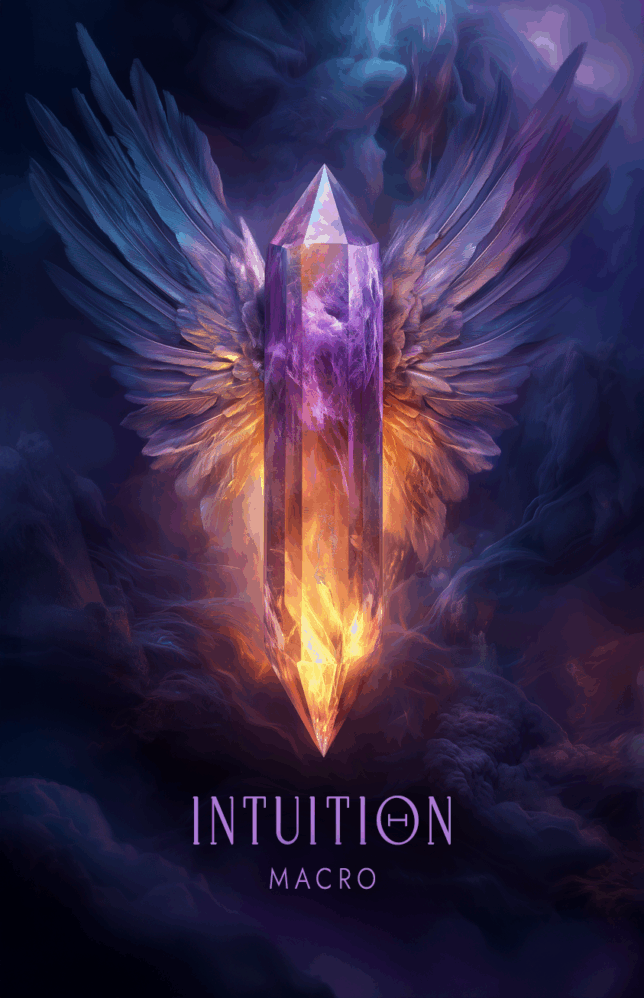
INTUITION and INTUITION MACRO on GDVPLANET
Who Can Benefit from Translighters “Intuition”
Translighters “Intuition” is helpful for anyone who wants to hear themselves more clearly and make decisions without constant doubt or error. It’s suitable for people from various fields and interests:
For those seeking their path If you’re facing a choice—changing jobs, starting a relationship, launching a project—intuition helps you sense the right direction and move forward with confidence.
In business and career For leaders, entrepreneurs, and professionals—it helps spot opportunities faster, find unconventional solutions, and sense the true motives of partners.
In relationships For those who want to better understand loved ones and build harmonious connections. Intuition helps distinguish your emotions from your partner’s and sense when to support or step back.
For creative individuals Artists, musicians, writers, researchers—anyone who lives through ideas and inspiration. Intuition boosts the flow of insights and helps discover new paths where logic gets stuck.
For those working with people Psychologists, teachers, doctors, coaches, healers—for fine-tuning to clients and gaining a more accurate understanding of their state.
For inner balance Anyone who wants to reduce anxiety, improve self-regulation, and feel their body and soul as a unified system.
Simply put, Translighters “Intuition” is useful for anyone tired of living by guesswork and ready to trust themselves—in both everyday choices and life-changing decisions.
How to Develop Intuition with Translighters
Intuition is a skill that unfolds gradually, like a muscle that strengthens with training. Translighters “Intuition” and its expanded version “Intuition Macro” offer a special space—an energetic tuning that enhances sensitivity and helps you hear inner signals more clearly.
To make the effect lasting, it’s important to build a “mindfulness routine” into your daily life—simple practices for developing intuition and emotional intelligence:
Body awareness Daily, notice where in your body the response “yes” or “no” appears.
Decision pauses Give yourself at least a few seconds to feel your inner response before acting.
Insight journaling Write down intuitive hunches and track how they play out.
Emotional reflection Learn to distinguish your emotions and their signals so you don’t confuse intuition with impulsiveness.
Daily Practices to Strengthen Intuition
Mindful Pausing
Take short pauses throughout the day—before responding to a message, making a decision, or entering a meeting. Ask yourself: “What feels true right now?” That moment of stillness is where intuition often speaks.
Body Awareness
Your body is a powerful antenna. Notice how it reacts in different situations—tightness, warmth, unease, lightness. These sensations often carry intuitive messages before your mind catches up.
Journaling for Clarity
Write down questions or dilemmas, then free-write your thoughts without overthinking. Often, intuitive insights emerge between the lines.
Visualization & Imagery
Imagine different choices as paths. Which one feels expansive? Which one feels heavy or closed off? This technique helps you bypass mental noise and access deeper knowing.
Dream Tracking
Keep a dream journal. Intuition often surfaces in symbolic form during sleep. Patterns and recurring themes can reveal hidden truths or guidance Real-Life Applications
Career Decisions
When evaluating a job offer or project, tune into your gut response before diving into pros and cons. What’s your first instinct? Does it feel aligned or off?
Relationships
Use intuition to sense emotional undercurrents. If something feels “off” in a conversation or dynamic, explore it gently. Your inner radar often picks up what words don’t say.
Health & Well-being
Before choosing a workout, meal, or rest, ask your body what it needs. You might be surprised how accurate your intuitive choices are over time.
Creative Flow
When stuck creatively, step away and let ideas simmer. Intuition often delivers breakthroughs when you’re relaxed and open—like in the shower or on a walk.
INTUITION and INTUITION MACRO on GDVPLANET